
Photoshop walkthrough

How to Remove Text from an Image in Photoshop

A six-step Content-Aware Fill workflow for text painted onto walls, photos and other textured backgrounds.

6 steps
Selection through final cleanup
New layer
Keep the edit non-destructive
Best for
Detailed manual control
Photoshop document with painted wall text selected
From selected wall lettering to a clean brick texture
Quick answer

In Photoshop, select the text area with a marquee or lasso, open Edit and choose Content-Aware Fill, refine the sampling area, output the fill to a new layer and clean any repeated texture with the Healing Brush. Save a layered PSD before exporting the final image.

Illustrated tutorial

Follow every step in the editing interface

  1. 01

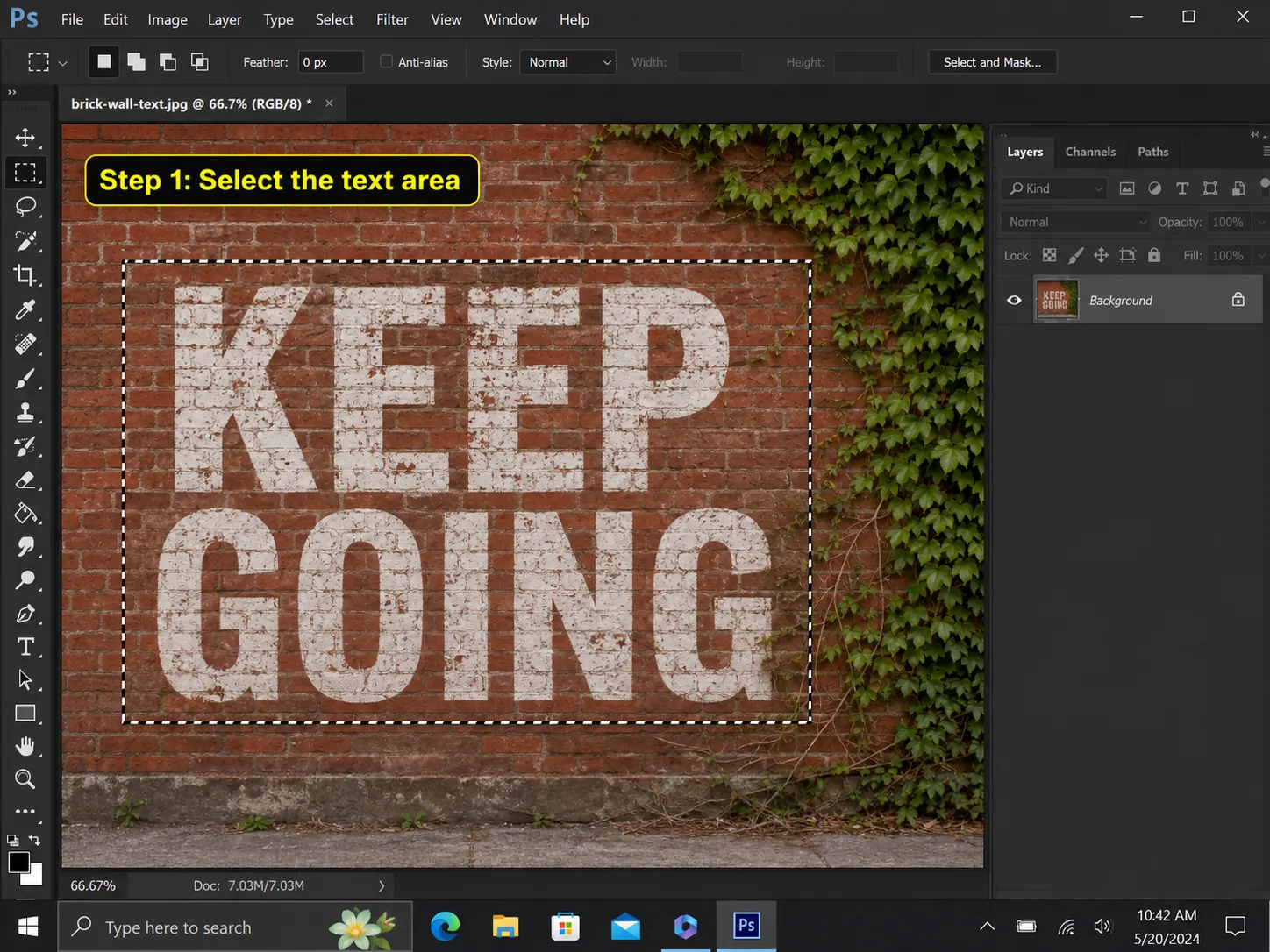
    Select the text area

    Use the Rectangular Marquee for a block of type or the Lasso for an irregular outline. Include a small margin around the letters.

    Step 1 selecting text in Photoshop with the marquee tool
  2. 02

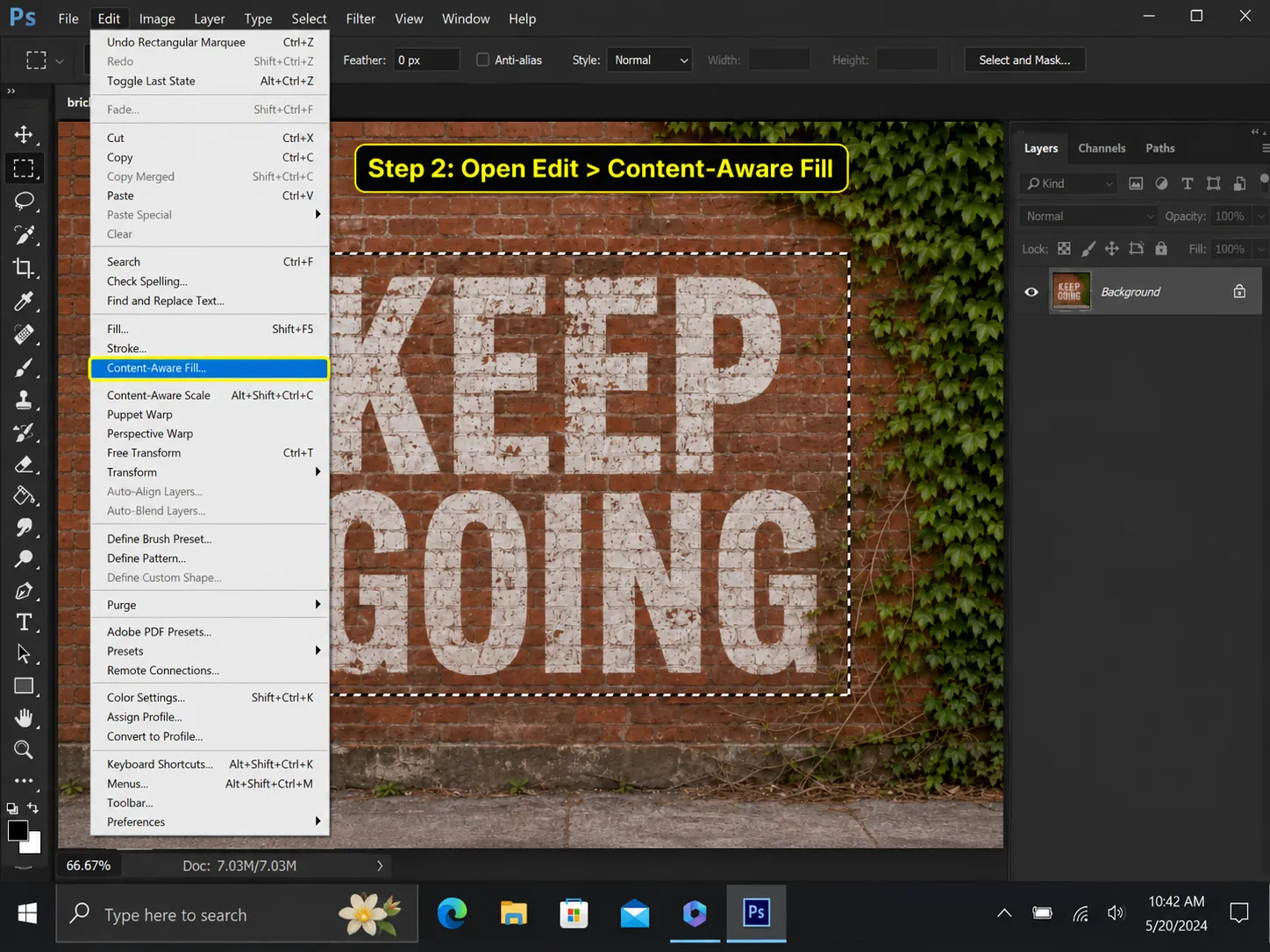
    Open Content-Aware Fill

    With the selection active, choose Edit, then Content-Aware Fill. Photoshop opens a preview and sampling workspace.

    Step 2 opening Content-Aware Fill from the Photoshop Edit menu
  3. 03

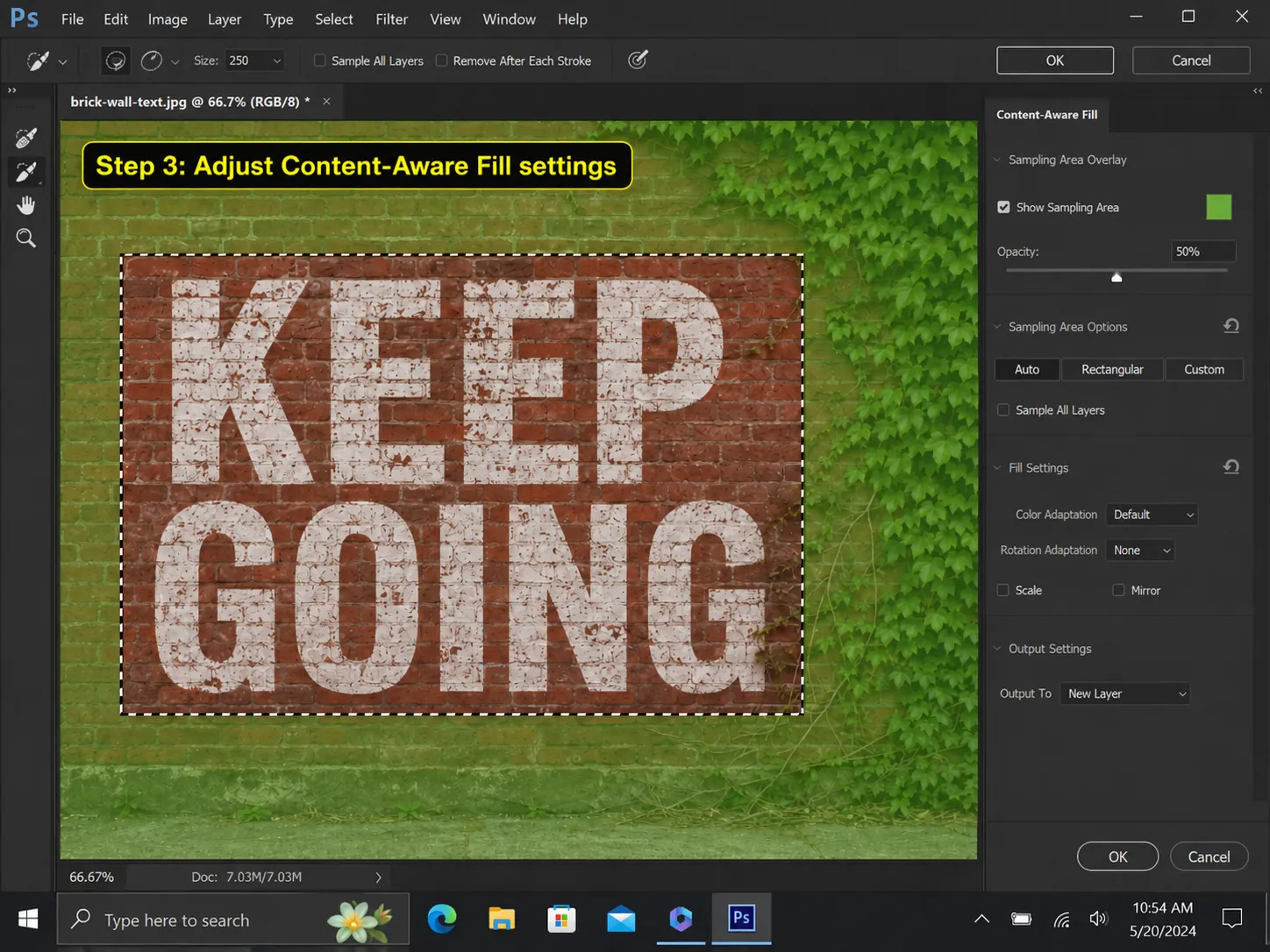
    Refine the sampling area

    Exclude people, objects and unrelated textures from the green sampling overlay. Let Photoshop sample clean background that matches the covered region.

    Step 3 adjusting the Content-Aware Fill sampling area
  4. 04

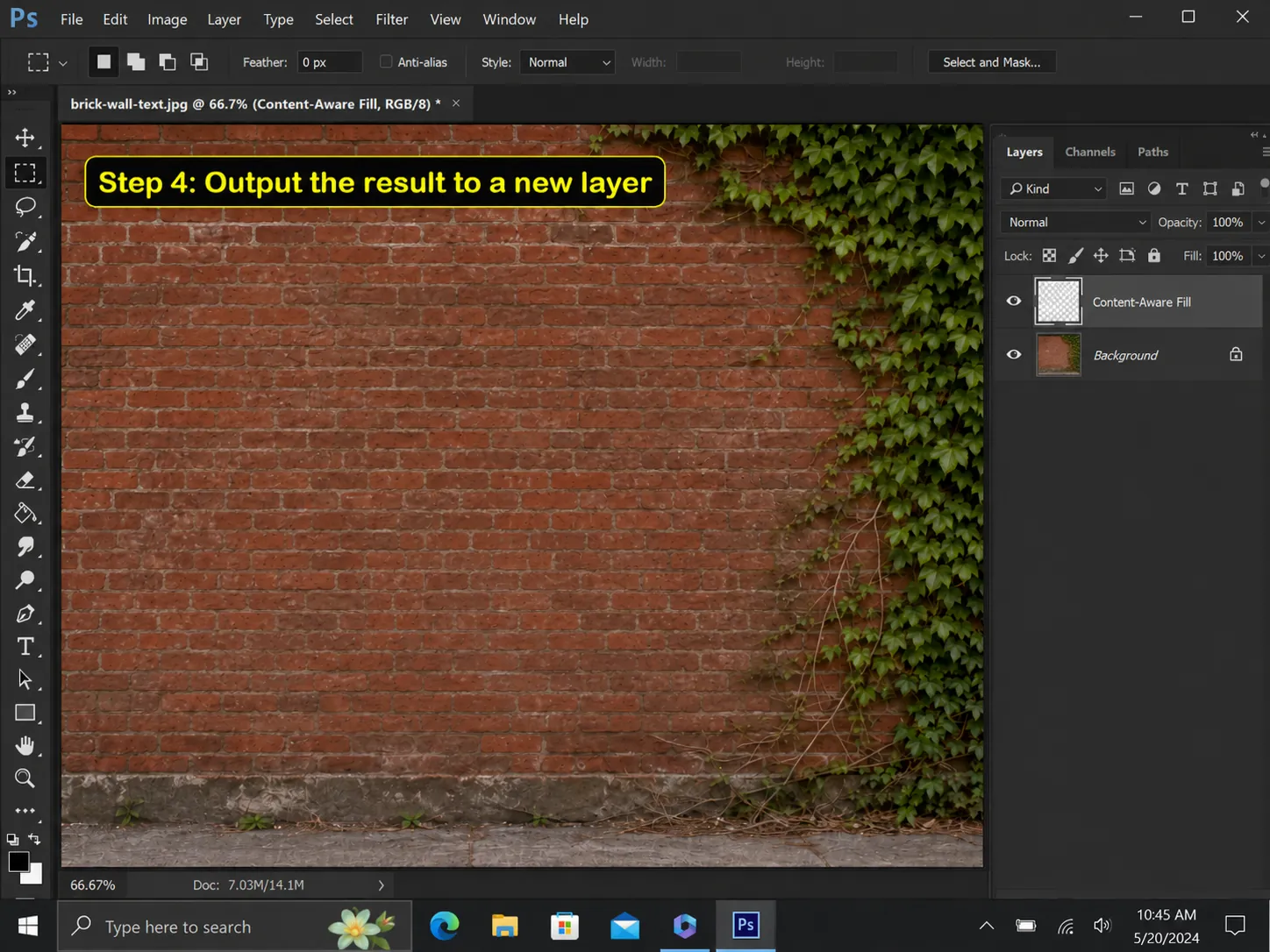
    Output to a new layer

    Choose New Layer in Output Settings. This keeps the original image intact and makes later corrections easier to undo.

    Step 4 Content-Aware Fill result placed on a new layer
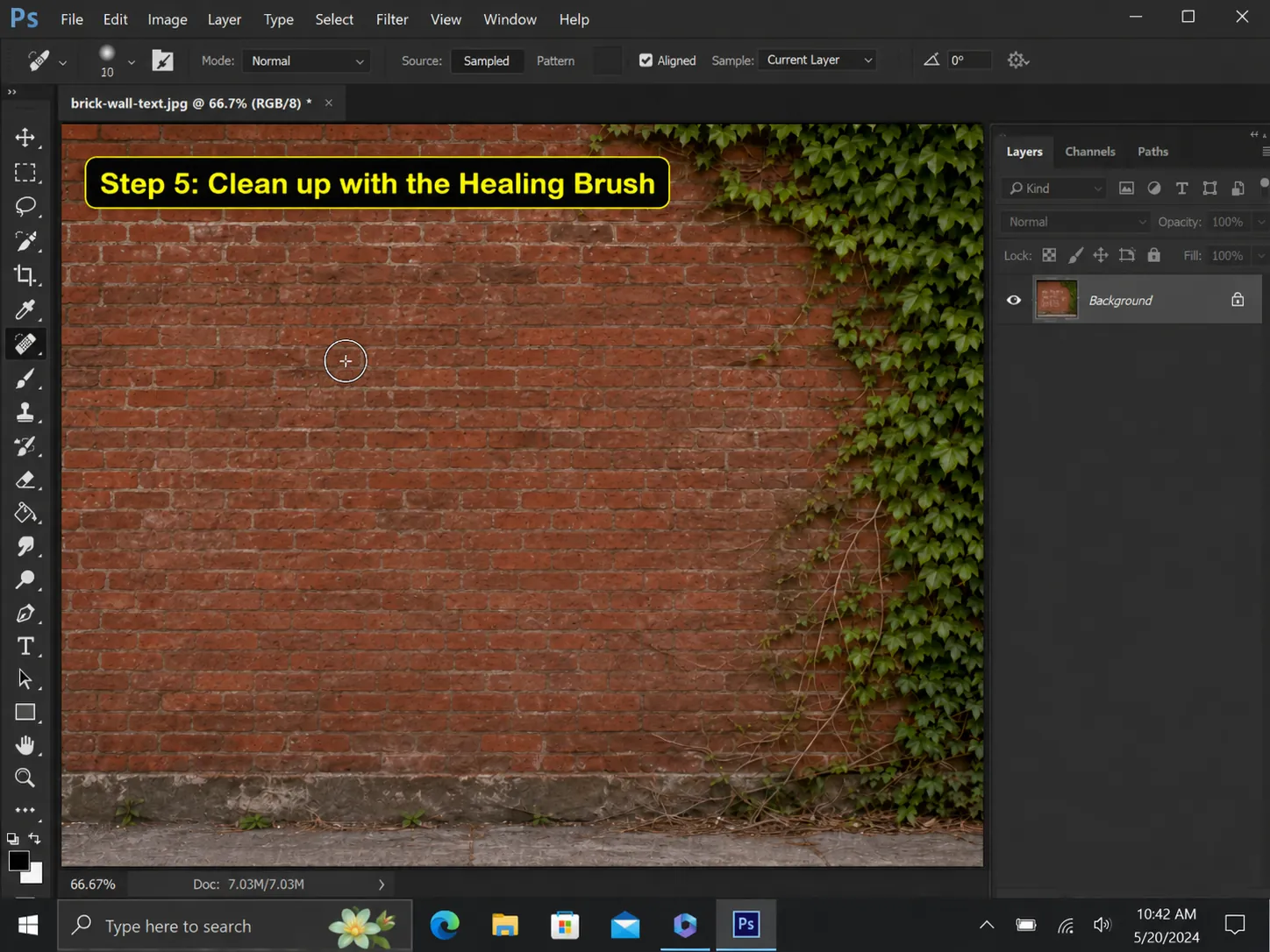
  5. 05

    Clean repeated details

    Use the Healing Brush or Clone Stamp on a separate layer to break up obvious repetitions and restore straight seams.

    Step 5 cleaning the filled wall with the Healing Brush
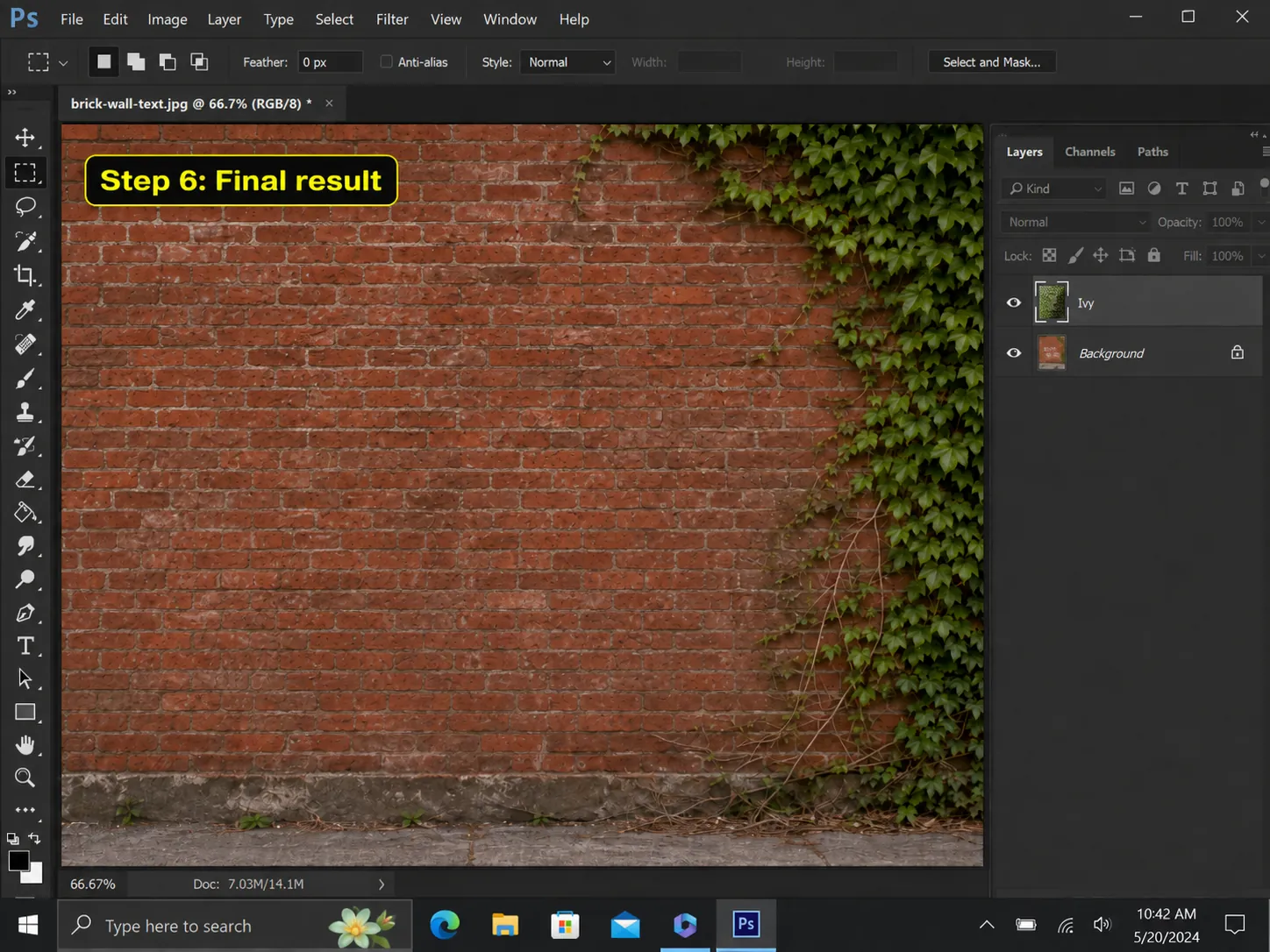
  6. 06

    Review and export

    Check the repair at 100 percent, save the layered PSD, then export the finished JPG or PNG.

    Step 6 final Photoshop image after text removal

Need the text gone without building a manual selection?

Photoshop is the right choice when you need layer-level retouching and exact sampling control. For a flattened image that mainly needs its words removed, RemoveText offers a faster first pass with no selection mask or sampling overlay to configure.

  • Upload JPG, PNG or WebP files directly in the browser
  • Remove every word or describe only the text you want erased
  • Process up to 10 images in one batch
  • Download without an added RemoveText watermark
Try RemoveText

You can still open the cleaned result in Photoshop for final pixel-level corrections.

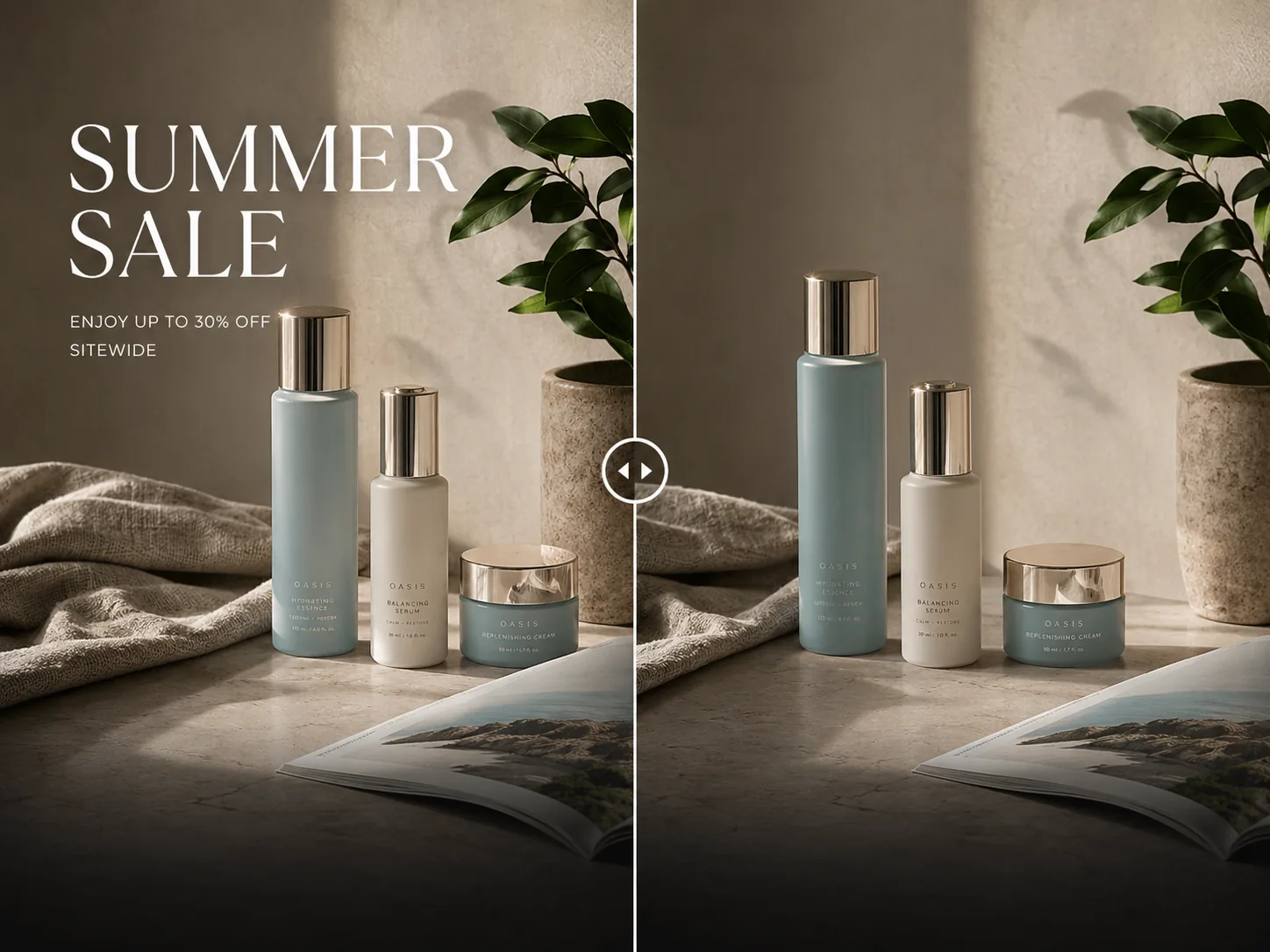
Before and after comparison showing text removed from a product image
One focused workflow for automatic and selective text removal

Selection and sampling tips

A selection that touches the letter edges too closely can leave a pale outline. Expand the selection slightly when the type has a stroke, shadow or painted texture.

Sampling quality matters more than selection shape on patterned backgrounds. Remove leaves, people and unrelated objects from the sampling overlay so they are not copied into the fill.

  • Use Select and Modify to expand a tight selection
  • Output to a new layer instead of the background
  • Repair long lines and repeating brick seams last

When the Photoshop method is worth it

Photoshop is useful when you need precise control over protected objects, perspective lines or a client file that must remain layered. The tradeoff is time: complex lettering often needs separate selections and manual cleanup.

For a quick flattened image, an AI text remover can be a faster first pass. You can still open that result in Photoshop for a small local correction.

FAQ

Questions about this workflow

Which Photoshop tool removes text from a photo?+

Content-Aware Fill is a strong first choice for text baked into a photo. Generative Fill, Remove Tool, Healing Brush and Clone Stamp can also help depending on the background.

Why is Content-Aware Fill unavailable?+

Make sure a pixel layer and active selection are present. Some smart objects, unsupported color modes or empty layers may need rasterizing or a different target layer.

Should I use Content-Aware Fill or Generative Fill?+

Content-Aware Fill samples existing pixels and gives direct sampling control. Generative Fill can synthesize more complex missing content but may introduce larger visual changes.

How do I keep the edit reversible?+

Duplicate the source or output the fill to a new layer. Save a PSD with layers before exporting the flattened result.

AI image cleanup

Clean the words from your own image

Upload a supported image, target all text or selected words and review the reconstructed background.

Upload an image